Capitol Reef stargazing and Milky Way guide
Capitol Reef National Park is a Gold-tier International Dark Sky Park, with some of the darkest skies in the US and fewer visitors than Arches. This guide covers the best spots for stargazing and Milky Way photography, the best nights in 2027, and what to know before you go.
Best places to see the Milky Way in Capitol Reef
Panorama Point and Goosenecks Overlook
Just off Highway 24 near the west side of the park, with wide views and short, easy walks. A good first night.
Fruita
The old orchard settlement in the middle of the park, with historic buildings and fruit trees as foreground. Easy to reach, near the campground.
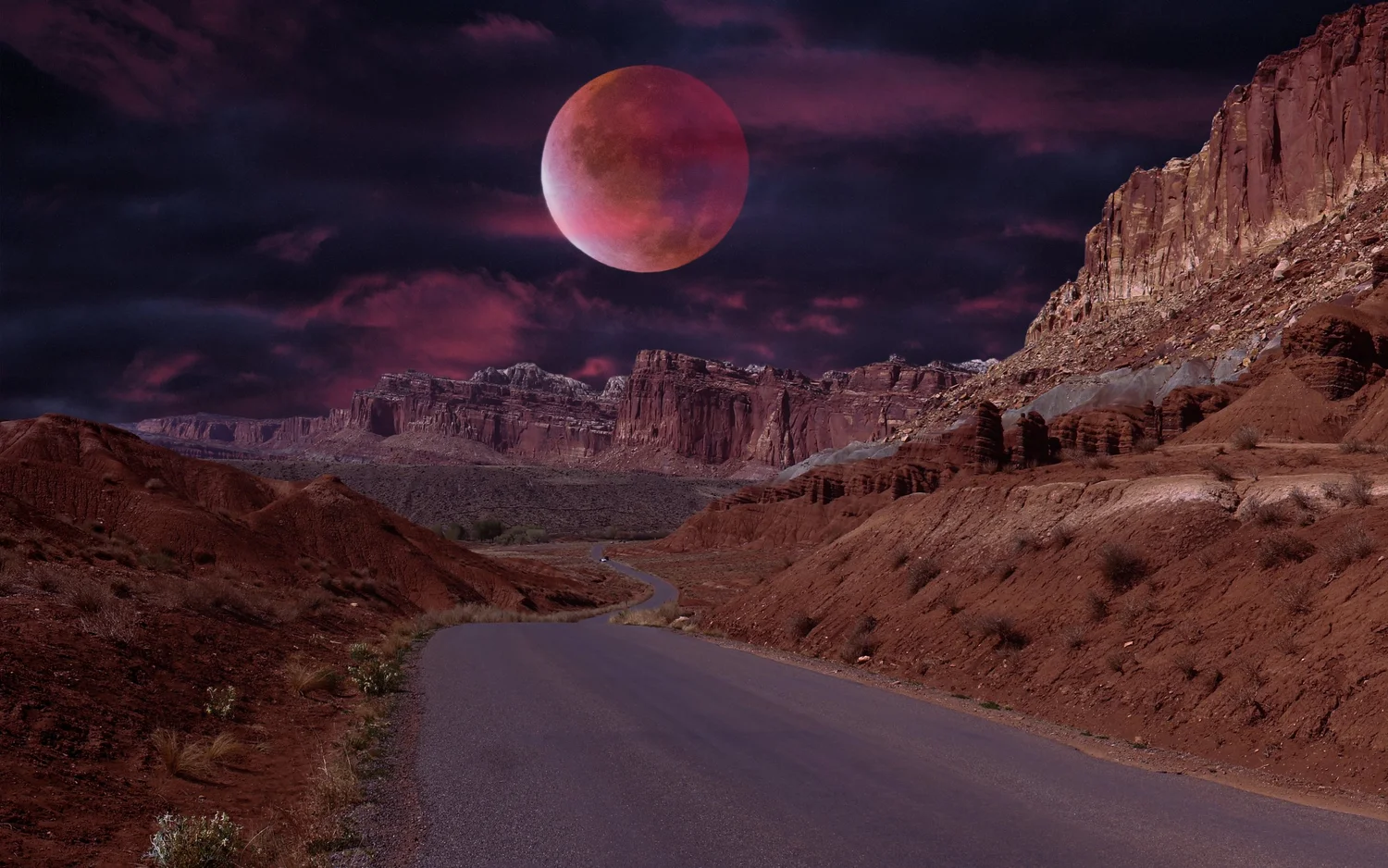
Highway 24 and the scenic drive
The roads curve through cliffs and domes. A road leading into the sky makes a strong photo, like the Eclipse in Capitol Reef print. Only shoot when there's no traffic, and never stand in the road.
Cathedral Valley
Remote sandstone monoliths in the north of the park, reached by long dirt roads that need a high-clearance vehicle. Very dark, but only go if you're prepared and the roads are dry.
Best time to see the Milky Way in Capitol Reef in 2027
"Best nights" are runs of nights with at least an hour of the Milky Way's core in a fully dark sky with no Moon. "Best window" is the month's single best night. Each date is the evening the night begins, and times are Mountain Time, with daylight saving. For other dates and the cloud forecast, use the planner, set to Capitol Reef.
| Month | New moon | Best nights | Best window |
|---|---|---|---|
| March | Mar 8 | Mar 4 to 16; Mar 31 to Apr 14 | Mar 15: 4:31 am to 6:05 am 1 h 34 min |
| April | Apr 6 | Mar 31 to Apr 14; Apr 28 to May 14 | Apr 12: 2:41 am to 5:19 am 2 h 38 min |
| May | May 6 | Apr 28 to May 14; May 25 to Jun 13 | May 31: 11:29 pm to 3:31 am 4 h 2 min |
| June | Jun 4 | May 25 to Jun 13; Jun 23 to Jul 12 | Jun 6: 11:05 pm to 4:05 am 5 h |
| July | Jul 3 | Jun 23 to Jul 12; Jul 24 to Aug 8 | Jul 1: 10:49 pm to 3:35 am 4 h 46 min |
| August | Aug 2, Aug 31 | Jul 24 to Aug 8; Aug 23 to Sep 4 | Aug 1: 10:19 pm to 1:33 am 3 h 14 min |
| September | Sep 29 | Aug 23 to Sep 4; Sep 21 to 30 | Sep 1: 9:29 pm to 11:31 pm 2 h 2 min |
| October | Oct 29 | Under an hour | Oct 1: 8:37 pm to 9:33 pm 56 min |
Tips for stargazing in Capitol Reef
- The park is far from any city, so the sky is dark in every direction, including south toward the Milky Way's core.
- Check nps.gov/care before you go for current rules and road conditions. You need a park pass for the scenic drive.
- Most of the park is above 5,000 feet, so nights are cool even in summer. Bring a warm layer and a headlamp with a red light.
- Cell service is limited, so download maps and the planner's times ahead. Dirt roads become impassable when wet.
Prints from Capitol Reef
Photographed by Nicholas O'Toole. Every print is made to order on Kodak lustre paper and ships boxed.
Capitol Reef stargazing FAQ
When is the best time to see the Milky Way in Capitol Reef?
In 2027 the Milky Way's core is up in a dark, moonless sky in Capitol Reef from early March to early October. The longest windows are in May, June, July and August, around the new moon. The single best night is June 6, from 11:05 pm to 4:05 am.
Is Capitol Reef a Dark Sky Park?
Yes. Capitol Reef was certified as an International Dark Sky Park in 2015 and given Gold tier, the highest rating for sky quality.
Is Capitol Reef good for stargazing?
Yes. The park is remote and far from city lights, so the sky is dark in every direction. Fruita and the overlooks along Highway 24 are easy places to start.